
Polypharmacy Prevention for Safer Drug Therapy Management
A morning medication pass in a Hallandale Beach assisted living community near Ansin Boulevard often highlights a quiet but serious risk. A resident may receive prescriptions from several providers, and each medication may address a valid health concern. However, the full regimen can create overlapping effects, drug interactions, duplicate therapy, or confusion during administration. In these care environments, Polypharmacy Prevention becomes a structured clinical priority that supports safer drug therapy management.
Park Shore Pharmacon helps long-term care facilities review medication profiles, identify unnecessary complexity, and support clearer communication between pharmacists, providers, and care teams. This process allows staff to understand why each medication remains part of the treatment plan and when therapy may need reassessment. Through coordinated pharmacy oversight, facilities can reduce medication-related risks, improve administration accuracy, and support patient safety while maintaining care plans that reflect each resident’s needs.
How Polypharmacy Prevention Works in Long-Term Care Settings
Residents in long-term care frequently manage multiple chronic conditions. Diabetes, hypertension, neurological disorders, and behavioral health needs often require ongoing medication therapy. Without structured review, these therapies can accumulate and increase risk. Polypharmacy Prevention focuses on evaluating whether each medication remains necessary, appropriate, and safe within the full regimen.
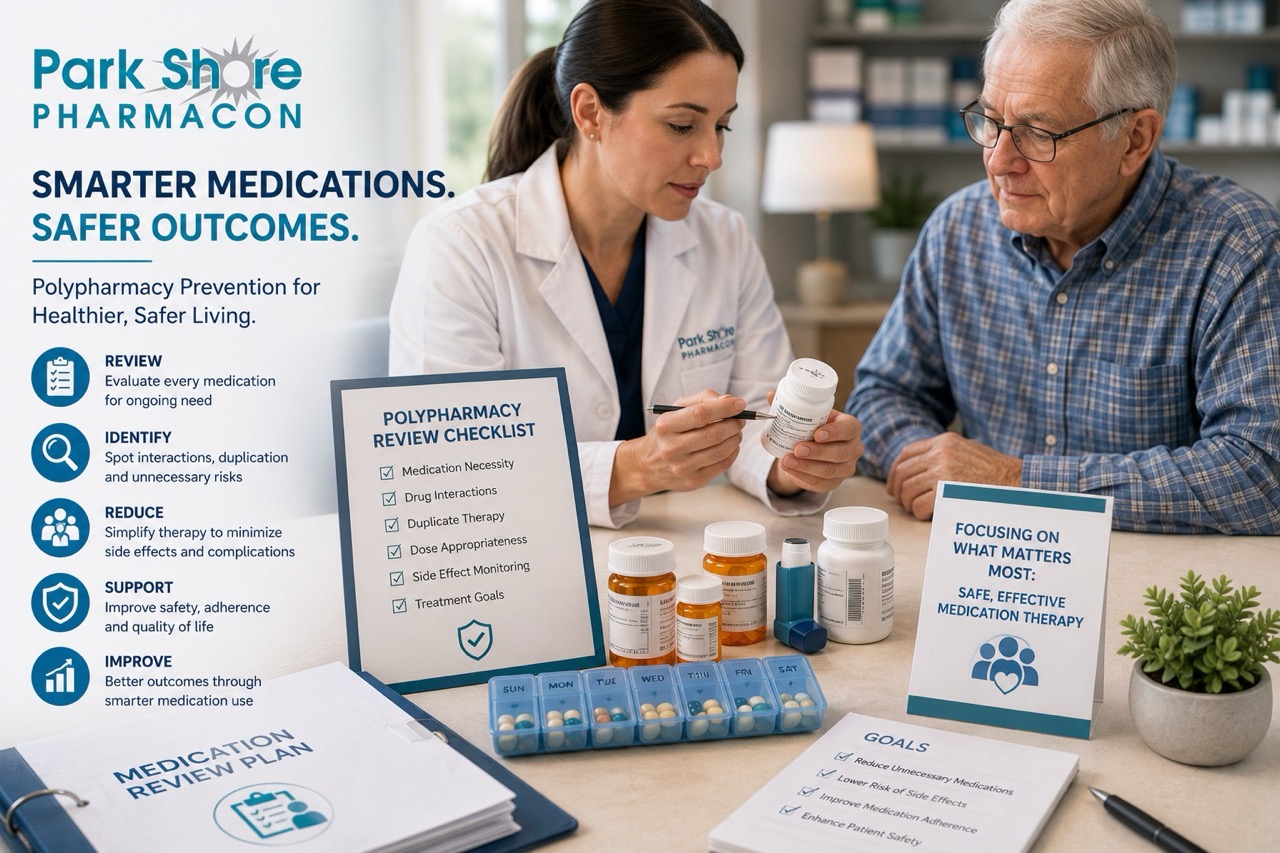
Park Shore Pharmacon supports facilities through pharmacist-led medication review processes. Each prescription is evaluated for duplication, interaction risk, and alignment with the patient’s current clinical status. Instead of treating medications as isolated prescriptions, this approach examines how they function together.
Clinical teams benefit from a system that prioritizes clarity. Caregivers understand dosing schedules more easily, providers receive structured feedback, and residents experience more stable outcomes. This process reduces complexity without compromising care quality.
Why Polypharmacy Prevention Matters for Patient Safety
Multiple medications can increase the likelihood of adverse drug events, especially in older adults. Side effects such as dizziness, confusion, and falls often result from overlapping therapies. Polypharmacy Prevention helps reduce these risks by ensuring that every medication serves a clear and necessary purpose.
Research from the National Institutes of Health shows that polypharmacy is associated with increased hospitalization and adverse outcomes in aging populations. Reducing unnecessary medications improves patient safety and overall quality of care.
Park Shore Pharmacon works with facilities to identify medications that may no longer be needed or that require adjustment. This process helps minimize unnecessary exposure while maintaining effective treatment.
What Factors Influence Medication Complexity
Several clinical and operational factors can increase medication burden in long-term care settings. Polypharmacy Prevention helps facilities review these issues carefully and reduce unnecessary complexity.
- Number of chronic conditions: Residents with several chronic conditions often need multiple therapies. Park Shore Pharmacon helps facilities review whether each medication still supports the current care plan and whether the overall regimen remains clinically appropriate.
- Changes in health status: Health changes can affect how residents respond to medication. A new diagnosis, hospital return, weight change, or decline may require review to prevent outdated prescriptions from continuing unnecessarily.
- Prescribing patterns across providers: Multiple providers may prescribe medications without seeing the full regimen. Park Shore Pharmacon helps facilities identify overlaps, duplicate therapies, and communication gaps that can increase medication burden.
- Patient tolerance and side effects: Some residents experience dizziness, confusion, appetite changes, or fatigue from medications. Reviewing tolerance helps facilities recognize when symptoms may relate to therapy rather than a new condition.
- Drug interactions and contraindications: Medication interactions can increase risks or reduce effectiveness. Park Shore Pharmacon reviews medication profiles to help facilities identify interaction concerns and support safer therapy decisions.
Common Causes of Polypharmacy in Facility-Based Care
Polypharmacy does not occur suddenly. It often develops over time as residents receive new medications from different providers, experience changing health needs, or continue therapies that no longer match their current condition. Polypharmacy Prevention helps facilities identify these root causes before medication regimens become unnecessarily complex.
Long-term care teams often encounter multiple providers prescribing independently, limited routine medication review, symptoms treated with new prescriptions before existing therapy is evaluated, chronic conditions that require frequent adjustments, and incomplete communication between care teams.
Park Shore Pharmacon supports facilities by creating structured medication review processes and clearer communication pathways between pharmacists, providers, nurses, and caregivers. This coordination helps teams understand the full medication picture before changes occur. When facilities share information consistently, medication decisions become more organized, clinically appropriate, and easier to manage across daily care routines.
The Role of Pharmacists in Polypharmacy Prevention
Pharmacists play a central role in reducing medication complexity across long-term care settings. Their clinical training helps facilities evaluate whether each medication still supports the resident’s current needs. Park Shore Pharmacon supports Polypharmacy Prevention through structured review, therapy monitoring, and pharmacist-guided communication with care teams.
Review Complete Medication Profiles
Pharmacists review each resident’s full medication profile to understand how prescriptions, over-the-counter products, and supplements work together. Park Shore Pharmacon uses this review to identify concerns, clarify active therapies, and help facilities maintain organized medication records that support safer decision-making.
Identify Duplicate Therapies
Duplicate therapy can occur when multiple providers prescribe similar medications for related conditions. Park Shore Pharmacon pharmacists help identify overlapping treatments that may increase side effects or confusion. This review supports safer medication use and helps care teams evaluate whether each medication has a clear clinical purpose.
Evaluate Drug Interactions
Drug interactions can create unwanted effects, reduce medication effectiveness, or increase patient risk. Park Shore Pharmacon pharmacists assess each regimen for interaction concerns based on the resident’s health status, allergies, and current therapies. This process helps facilities reduce preventable medication-related complications.
Recommend Deprescribing When Appropriate
Deprescribing requires careful clinical judgment and provider involvement. Park Shore Pharmacon pharmacists may recommend reassessment when a medication no longer supports the resident’s current care goals or creates unnecessary risk. This guidance helps providers consider safer, simpler therapy plans when appropriate.
Monitor Patient Response to Therapy Changes
Medication changes require follow-up to ensure residents remain stable and comfortable. Park Shore Pharmacon supports facilities by monitoring therapy updates, reviewing outcomes, and helping teams recognize concerns after adjustments. This ongoing review helps maintain balanced medication regimens and supports safer long-term care.
Clinical Expertise Beyond Polypharmacy Prevention
Long-term care residents often manage multiple diagnoses, changing health needs, and complex medication regimens. Polypharmacy Prevention works best when it fits within a broader clinical support system. Park Shore Pharmacon provides clinical expertise across dementia and Alzheimer’s medication management, behavioral health and psychotropic medication review, seizure and epilepsy therapy coordination,
Parkinson’s disease support, G-Tube and J-Tube medication administration, and infection prevention strategies. This broader clinical knowledge helps facilities evaluate how each medication affects the resident’s overall care plan. For example, a resident with cognitive changes, swallowing challenges, or neurological conditions may require closer medication timing, administration guidance, and interaction review.
Park Shore Pharmacon helps care teams connect these clinical factors with pharmacy operations so treatment remains balanced and appropriate. This integrated approach supports safer medication decisions, clearer communication, and care plans that reflect each resident’s full health profile.
Essential Pharmacy Equipment Every Florida Group Home Should Have
Cost and Operational Impact of Polypharmacy Prevention
Medication complexity affects patient safety, facility workflow, staffing time, documentation demands, and overall cost control. Polypharmacy Prevention helps facilities reduce unnecessary medications so care teams can manage therapy with greater clarity and efficiency. When residents take fewer unnecessary medications, facilities may lower pharmacy costs, reduce the risk of adverse drug events, simplify medication administration, and improve regulatory compliance.
Park Shore Pharmacon helps long-term care teams connect medication review with daily operations, so clinical decisions support both safety and workflow stability. A simplified regimen can reduce confusion during medication rounds and help staff spend less time resolving duplicate therapies, unclear orders, or avoidable refill issues.
This approach also supports stronger documentation because each medication has a clearer purpose within the care plan. By aligning pharmacist oversight with facility operations, Park Shore Pharmacon helps create safer, more organized, and more cost-conscious medication systems.
Mistakes Facilities Should Avoid in Medication Management
Even experienced care teams can unintentionally increase medication complexity. Polypharmacy Prevention helps facilities recognize common medication management mistakes before they create avoidable risks.
- Adding medications without reviewing existing therapy: New prescriptions should not automatically enter a regimen without review. Park Shore Pharmacon helps facilities evaluate current medications first to avoid unnecessary additions, duplication, or treatment overlap.
- Continuing medications that no longer serve a purpose: Some medications remain active after the original need changes. Regular review helps care teams identify outdated therapies and discuss appropriate reassessment with licensed providers.
- Overlooking interactions between prescriptions: Multiple medications can interact in ways that affect safety. Park Shore Pharmacon helps facilities review full medication profiles so staff can identify potential risks before they affect patient care.
- Failing to reassess treatment after changes in condition: A resident’s medication needs may change after illness, hospitalization, or clinical decline. Reassessment helps facilities keep treatment plans aligned with current health status.
- Using multiple medications to treat side effects of other drugs: Adding medication to manage another drug’s side effects can increase complexity. Park Shore Pharmacon helps facilities identify these patterns and support clearer medication review.
Integrating Polypharmacy Prevention Into Daily Operations
Consistency determines the success of any medication safety program. Polypharmacy Prevention should become part of daily long-term care routines rather than an occasional review completed only after a problem occurs. Park Shore Pharmacon supports facilities through routine medication reconciliation, structured communication between care teams, ongoing pharmacist involvement, and documentation systems that support compliance.
Staff can identify medication concerns more effectively when review steps fit naturally into admission processes, provider updates, hospital return workflows, and routine medication changes. Clear communication also helps nurses, caregivers, pharmacists, and providers stay aligned when treatment plans shift.
We offer 7-day per week service so facilities can maintain continuity of care and receive consistent support throughout the week. With daily integration, facilities can reduce avoidable medication risks, improve staff confidence, and maintain more stable care routines for residents with complex health needs.
Additional Services That Support Clinical Outcomes
Medication safety requires coordination across multiple pharmacy service areas. While Polypharmacy Prevention addresses medication complexity, Park Shore Pharmacon also provides services that support safer and more efficient long-term care operations. Medication packaging systems, including unit-dose and multi-dose formats, help reduce confusion and improve accuracy during medication rounds.
Cycle-fill coordination aligns medications with facility schedules, which reduces frequent refill requests and supports organized inventory management. Delivery services help facilities manage routine schedules and urgent medication needs while maintaining reliable access to medications. Technology integration improves communication, tracking, and documentation through electronic systems that allow care teams to monitor therapy changes and coordinate more efficiently.
Consulting and training services also support staff education by providing guidance on medication safety, documentation practices, and compliance readiness. Park Shore Pharmacon aligns these services with each facility’s workflow so medication management remains structured, practical, and patient-centered.
Frequently Asked Questions (FAQs) About Polypharmacy Prevention
- What is Polypharmacy Prevention?
It refers to reducing unnecessary medications and ensuring each prescription is appropriate for the patient. - Why is Polypharmacy Prevention important?
It reduces the risk of drug interactions, side effects, and complications. - Who is responsible for managing medication complexity?
Providers, pharmacists, nurses, and facility staff all contribute. - How often should medications be reviewed?
Regular reviews should occur, especially after any change in condition. - Can reducing medications improve patient outcomes?
Yes, it often improves clarity, reduces side effects, and enhances safety. - What role do pharmacists play?
They review medication profiles and recommend adjustments when necessary. - Are all multiple medications harmful?
Not always, but unnecessary or overlapping medications can increase risk. - How does Polypharmacy Prevention reduce hospitalizations?
By minimizing adverse drug events and complications. - Does this approach affect treatment quality?
It improves treatment by focusing on necessary and effective medications. - Is Polypharmacy Prevention required for compliance?
Many healthcare standards encourage medication review programs.
Build Safer Medication Systems With Structured Prevention
Medication decisions shape patient outcomes every day. Polypharmacy Prevention helps facilities move from complex, overlapping regimens toward clear, clinically appropriate treatment plans.
Park Shore Pharmacon works with long-term care providers to build systems that support safe medication use. Through pharmacist oversight, workflow integration, and coordinated communication, facilities can reduce risk while maintaining high-quality care. Contact us today to learn how Park Shore Pharmacon can support your facility with structured medication management and clinical pharmacy services.
Facilities that adopt structured medication review practices improve patient safety, reduce complications, and strengthen overall care delivery. The goal remains clear: ensure that every medication serves a purpose and supports the patient’s well-being.
Park Shore Pharmacon
600 Ansin Boulevard
Hallandale Beach, FL 33009
Phone: 954.874.4646
Fax: 954.455.1378
Toll-Free Fax: 1-855-464-7779
General Inquiries: customerservice@parkshoredrug.com
Billing Department Inquiries: billing@parkshoredrug.com
Disclaimer: This content is provided for informational purposes only and does not constitute medical advice, diagnosis, or treatment. Polypharmacy prevention strategies should be guided by a licensed healthcare provider based on individual patient needs. Medication adjustments, including starting or stopping drugs, must be made under professional supervision. Park Shore Pharmacon supports medication coordination but does not replace clinical decision-making. Always consult qualified healthcare professionals for patient-specific care and treatment planning.