

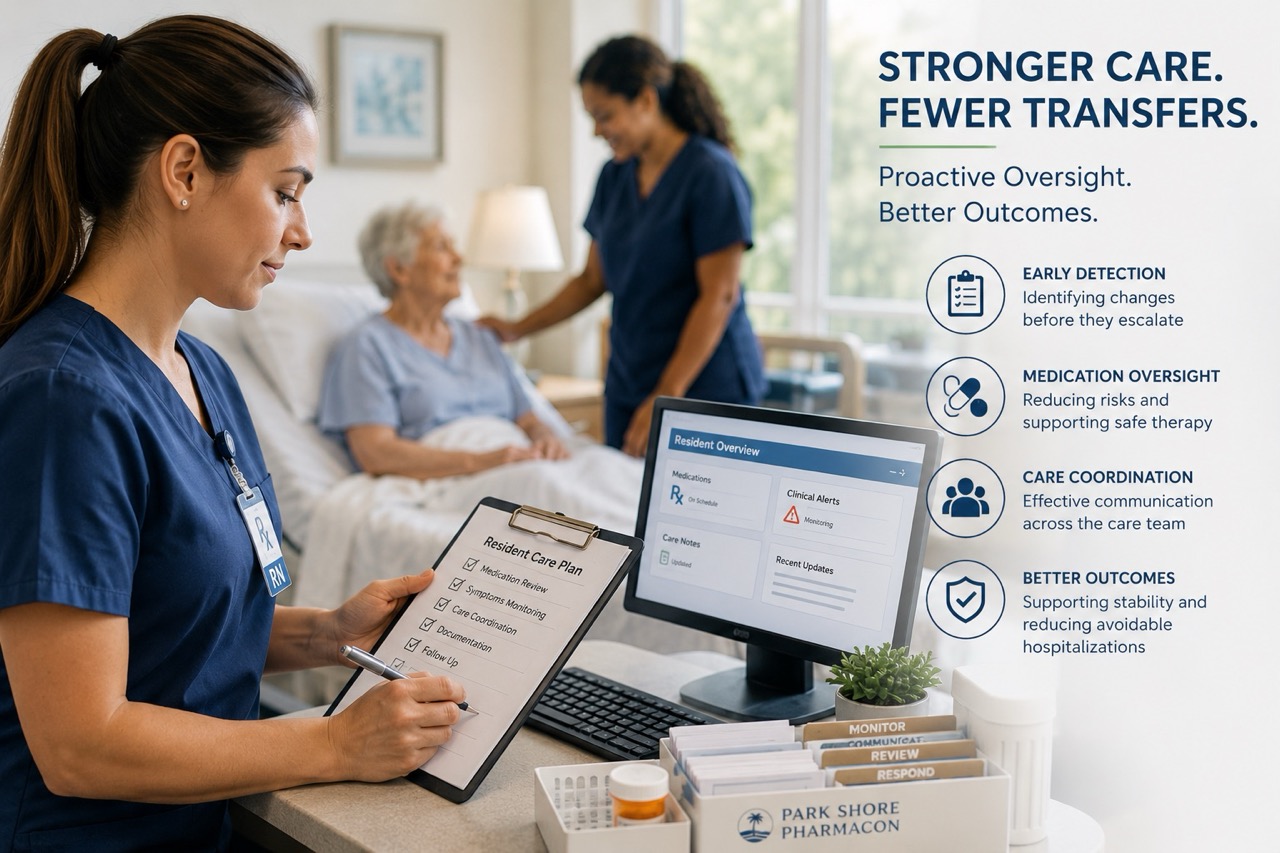
Hospitalizations Control Through Medication and Care Oversight
A late-night change in a resident’s condition inside a Hallandale Beach care facility can create immediate concern for nurses, caregivers, and family members. Staff near Ansin Boulevard may notice shortness of breath, confusion, sudden weakness, or changes in behavior, and the next decision often involves whether the resident needs hospital transfer. In these real care situations, Hospitalizations reflect more than an isolated medical event. They show how well a facility identifies early warning signs, communicates changes, reviews medications, and responds before a condition escalates.
Park Shore Pharmacon supports long-term care teams with structured clinical workflows, medication oversight, documentation support, and coordinated communication systems. This approach helps facilities evaluate risks more clearly, respond to resident changes sooner, and reduce avoidable transfers when appropriate clinical care can continue safely within the facility.
Understanding Hospitalizations in Long-Term Care Set tings
Residents in long-term care often live with multiple chronic conditions, making them more vulnerable to acute changes in health. Hospitalizations occur when conditions worsen beyond what can be safely managed within the facility. These events may involve infections, medication complications, respiratory issues, or cardiovascular concerns.
Park Shore Pharmacon works with facilities to identify patterns that lead to transfers. Instead of reacting only after a decline, clinical teams can use structured monitoring to detect early changes. This approach allows providers to intervene sooner and determine whether care adjustments can occur within the facility.
Facilities benefit from a system that emphasizes observation, documentation, and timely communication. Each of these elements plays a role in preventing unnecessary transfers while ensuring that residents receive appropriate care when needed.
Why Hospitalizations Impact Patient Outcomes and Facility Stability
Transfers to hospitals can expose residents to additional risks, including infections, disorientation, and disruptions in care continuity. Hospitalizations may also lead to longer recovery times and increased stress for both residents and families.
Research from the Centers for Disease Control and Prevention shows that many hospital transfers from long-term care settings may be preventable with proper care coordination. Improving early intervention strategies can significantly reduce unnecessary hospital visits.
Park Shore Pharmacon supports facilities by strengthening internal care processes. When teams can manage conditions effectively on-site, they reduce the need for transfers and improve overall patient experience.
Common Causes That Lead to Hospitalizations
Understanding why transfers occur helps facilities improve prevention strategies and strengthen daily care routines. Hospitalizations often result from conditions that develop gradually but become more serious when teams miss early warning signs or delay timely intervention.
- Respiratory infections and complications: Respiratory changes can progress quickly in long-term care residents. Staff should monitor coughing, breathing changes, fever, oxygen concerns, and weakness so providers can evaluate symptoms early and reduce avoidable escalation.
- Urinary tract infections that progress untreated: Urinary symptoms may appear as confusion, discomfort, fever, or behavior changes in older adults. Early documentation and provider coordination help facilities respond before infections worsen and require hospital-level care.
- Medication-related side effects or interactions: Drug interactions, dosing issues, or new medication side effects can cause dizziness, confusion, falls, or clinical decline. Park Shore Pharmacon helps facilities review medication profiles to identify risks earlier.
- Dehydration and electrolyte imbalances: Poor fluid intake, illness, or medication effects can contribute to dehydration and electrolyte imbalances. Staff monitoring helps identify weakness, confusion, low intake, or abnormal symptoms before conditions become severe.
- Cardiovascular events such as heart failure exacerbation: Residents with heart conditions may decline when fluid retention, shortness of breath, swelling, or fatigue worsen. Early symptom tracking and provider communication help facilities address changes before transfer becomes necessary.
Real-World Workflow From Symptom Detection to Care Decision
Effective prevention requires a clear process that helps staff move from observation to action without confusion. Hospitalizations can often decrease when facilities follow structured workflows that prioritize early detection, complete documentation, and coordinated response. Staff first observe changes in a resident’s condition, such as weakness, breathing changes, confusion, or reduced intake.
Team members then document symptoms through structured tools so providers can review accurate details. Providers evaluate whether symptoms suggest acute risk, while pharmacists review medications and possible causes such as side effects, interactions, or recent therapy changes. When appropriate, care adjustments can occur inside the facility with close monitoring.
Ongoing review helps staff track whether the resident improves or needs higher-level care. Park Shore Pharmacon supports this workflow through medication review, documentation support, and communication across care teams.
What Factors Influence the Likelihood of Hospitalizations
Several clinical and operational factors affect whether a resident requires hospital care. Hospitalizations often result from a combination of underlying illness, delayed symptom recognition, medication concerns, and limited care coordination. Residents with severe chronic conditions may need closer monitoring because small changes can escalate quickly.
Fast symptom recognition also matters because early response gives providers more time to evaluate care options. Medication management plays another key role, since interactions, side effects, or missed doses may worsen a resident’s condition. Communication between staff and providers helps ensure that changes do not get missed during shift transitions.
Access to clinical support inside the facility can also influence whether teams manage concerns safely on-site or require transfer. Park Shore Pharmacon evaluates these factors during facility collaboration to help teams strengthen prevention strategies and support stable resident care.
Mistakes Facilities Should Avoid When Managing Acute Changes
Even experienced teams can face challenges when a resident’s condition changes quickly. Common mistakes include delaying response to early symptoms, failing to review medications during clinical changes, keeping incomplete documentation, missing communication between shifts, and relying too quickly on transfer without evaluating facility-based options.
Hospitalizations may increase when staff do not document symptoms clearly or when providers lack enough information to make timely decisions. Medication review also matters because new symptoms may relate to recent therapy changes, interactions, or side effects. Park Shore Pharmacon helps facilities identify these patterns through pharmacist involvement, structured review, and communication support.
Clear workflows allow staff to respond earlier, share accurate updates, and coordinate provider input more effectively. This approach helps facilities reduce avoidable disruptions while maintaining patient safety as the main priority.
How to Order Consumable Medical Supplies for I/DD Facilities
Cost and Operational Impact of Hospitalizations
Hospital transfers affect residents, families, staff, and facility operations. Hospitalizations can increase healthcare costs, interrupt resident routines, disrupt staffing workflows, and create additional documentation responsibilities. When a transfer occurs, staff must coordinate records, communicate with providers, update families, and manage care transitions after the resident returns.
Reducing unnecessary transfers helps facilities maintain continuity of care and avoid added administrative strain. Strong prevention strategies can also support compliance with care standards because facilities show clear monitoring, documentation, and response processes.
Park Shore Pharmacon aligns clinical support with operational needs by helping teams strengthen medication review, communication, and care coordination. This support helps facilities manage both patient care and administrative demands more effectively. A structured approach does not replace hospital care when residents need it, but it helps teams avoid transfers that may occur because of preventable gaps in routine care.
Clinical Expertise Beyond Hospitalizations
Long-term care requires broad clinical support because residents often manage several conditions at once. Hospitalizations represent one part of patient care, but effective prevention depends on understanding each resident’s full health profile. Park Shore Pharmacon provides clinical expertise across dementia and Alzheimer’s medication management, behavioral health and psychotropic medication review, seizure and epilepsy therapy coordination, Parkinson’s disease support, G-Tube and J-Tube medication administration, and infection prevention strategies.
This clinical support helps facilities evaluate risks that may contribute to decline or transfer. For example, a resident with cognitive changes, swallowing concerns, or complex neurological needs may require closer medication timing, administration support, and interaction review. Park Shore Pharmacon helps care teams connect these clinical factors with pharmacy workflows so decisions support long-term patient stability, safer medication use, and stronger facility coordination.
The Role of Medication Management in Preventing Hospitalizations
Medication-related issues remain a major contributor to acute health changes. Incorrect dosing, drug interactions, or unnecessary medications can trigger serious complications. Hospitalizations linked to medication problems often occur when regimens are not reviewed regularly. Park Shore Pharmacon provides pharmacist-led medication oversight to support safer therapy. This includes:
Reviewing Prescriptions for Interactions and Duplication
Medication regimens can become complex when residents receive prescriptions from multiple providers. Park Shore Pharmacon reviews prescriptions to identify potential drug interactions, duplicate therapies, unclear directions, or unnecessary overlap. This pharmacist-led oversight helps facilities reduce medication-related risks and supports safer therapy decisions that may help prevent avoidable Hospitalizations.
Monitoring Patient Response to Medication Changes
Medication changes require close observation because residents may respond differently based on age, diagnosis, kidney function, or other clinical factors. Park Shore Pharmacon helps facilities monitor patient response after new prescriptions, dose adjustments, or discontinued therapies. This follow-up supports early identification of side effects, worsening symptoms, or concerns that require provider review.
Adjusting Therapy Based on Clinical Indicators
Clinical indicators such as blood pressure, lab values, symptoms, hydration status, or behavioral changes can show whether medication therapy needs reassessment. Park Shore Pharmacon supports providers and care teams by reviewing these indicators alongside medication profiles. This process helps facilities respond to changes more effectively and maintain safer treatment plans.
Supporting Providers With Evidence-Based Recommendations
Providers make treatment decisions based on clinical judgment, patient needs, and available data. Park Shore Pharmacon supports this process by offering evidence-based pharmacy recommendations when medication concerns arise. Pharmacist input can help clarify dosing, interactions, duration, and monitoring needs, allowing providers to make informed decisions for long-term care residents.
Integrating Hospitalizations Prevention Into Daily Facility Operations
Consistency plays a major role in reducing unnecessary transfers. Hospitalizations can often decrease when prevention strategies become part of daily facility routines rather than isolated responses after a resident declines. Park Shore Pharmacon supports integration through routine patient monitoring systems, structured communication protocols, ongoing pharmacist collaboration, and documentation practices that support compliance.
Staff can identify risks earlier when they monitor changes during medication rounds, meals, hydration checks, and shift reports. Pharmacist involvement also helps teams review whether medications may contribute to symptoms or require adjustment. Documentation ensures that providers receive clear information before making care decisions.
We offer 7-day per week service so facilities can maintain continuity of care and respond to changes without delay. When prevention becomes part of daily workflow, teams can support resident stability more consistently.
Additional Services That Support Clinical Outcomes
Reducing Hospitalizations requires coordination across multiple service areas because medication management alone cannot address every risk. Park Shore Pharmacon provides integrated services that support patient stability and facility operations. Medication packaging systems improve accuracy during administration, while unit-dose and multi-dose formats help reduce confusion during complex medication rounds.
Cycle-fill coordination ensures medications align with facility schedules, reducing interruptions and improving inventory control. Delivery coordination supports routine schedules and urgent needs while helping facilities maintain reliable medication access. Technology integration improves communication and tracking through electronic systems that help teams document changes, monitor patient conditions, and coordinate care.
Consulting and training services also support staff development by offering guidance on medication safety, documentation practices, and compliance readiness. Park Shore Pharmacon aligns these services with facility-specific needs to create safer, more stable, and more reliable long-term care environments.
Frequently Asked Questions (FAQs) About Hospitalizations
- What are Hospitalizations in long-term care?
They refer to transfers of residents to hospitals when conditions require advanced medical treatment. - Are all Hospitalizations preventable?
Not all, but many can be reduced through early intervention and proper care coordination. - What causes most Hospitalizations in care facilities?
Infections, medication issues, and chronic condition exacerbations are common causes. - How can facilities reduce Hospitalizations?
Through monitoring, medication review, and timely clinical response. - What role do pharmacists play?
They review medications, identify risks, and support treatment adjustments. - Do Hospitalizations affect recovery time?
Yes, they can lead to longer recovery and increased complications. - How does communication impact Hospitalizations?
Clear communication helps identify issues early and prevent escalation. - Are medication errors linked to Hospitalizations?
Yes, improper medication use can lead to complications requiring transfer. - How often should residents be monitored?
Monitoring should occur regularly, especially for high-risk individuals. - Does prevention improve facility performance?
Yes, reducing transfers supports better outcomes and operational efficiency.
Strengthen Patient Stability and Reduce Unnecessary Transfers
Reducing Hospitalizations requires structured processes, clinical oversight, and consistent communication. Facilities that focus on early detection, medication management, and coordinated care create safer environments for residents.
Park Shore Pharmacon works closely with long-term care providers to build systems that support proactive care. Through pharmacist involvement, workflow integration, and ongoing collaboration, facilities can reduce avoidable transfers while maintaining high standards of care. Contact us today to learn how Park Shore Pharmacon can support your facility with coordinated pharmacy and clinical services.
The goal remains clear. Support patient stability, respond early to changes, and ensure that every decision reflects informed clinical judgment.
Park Shore Pharmacon
600 Ansin Boulevard
Hallandale Beach, FL 33009
Phone: 954.874.4646
Fax: 954.455.1378
Toll-Free Fax: 1-855-464-7779
General Inquiries: customerservice@parkshoredrug.com
Billing Department Inquiries: billing@parkshoredrug.com
Disclaimer: The information provided on this page is for general educational and informational purposes only and is not intended as medical advice, diagnosis, or treatment guidance. Hospitalizations and related care decisions depend on individual patient conditions and must be determined by licensed healthcare providers. Park Shore Pharmacon offers pharmacy services and clinical support to long-term care facilities in coordination with medical professionals, but does not make independent treatment decisions. Outcomes may vary based on patient health status, facility practices, and provider judgment.